
Insulin Resistance and Weight Gain: The Real Reason You Can't Lose Fat in the Philippines

You are eating carefully. You are moving regularly. You have tried cutting carbohydrates, reducing portions, and following every reasonable dietary principle you know. And the scale has barely moved. The weight that has appeared, particularly around your abdomen, has not responded to genuine effort the way you expected it would.
If this is your experience, you are not lazy, not undisciplined, and not failing to try hard enough. What you may be facing is insulin resistance, and it is one of the most common and most underdiagnosed reasons that weight loss feels disproportionately difficult for Filipino adults.
This guide is written for the reader who has been doing the work and not seeing the results. It explains why insulin resistance and weight gain in the Philippines is so commonly the missing piece, how to recognise whether it applies to you, and what can actually change the picture once it is properly identified.
This article is for informational purposes only and does not constitute medical advice. Always consult a licensed physician for proper evaluation and management of insulin resistance and related metabolic conditions.
Why Your Weight Loss Efforts Are Not Working
There is a specific frustration that brings many Filipino patients to a consultation. They describe a clear pattern: friends and family members on similar diets are losing weight, but they are not. Their weight settles around the abdomen and seems immune to caloric restriction. They feel hungry shortly after meals, crave rice and sweets in the afternoon, and have stopped trusting their own efforts.
This pattern has a physiological explanation, and it is not a failure of willpower. It is the predictable consequence of a metabolic environment that is biased toward fat storage and against fat release. When your body's insulin is chronically elevated, the rules of weight loss that work for an insulin-sensitive person do not apply to you in the same way. The caloric deficit is real. The food choices are reasonable. The exercise is happening. But the metabolic machinery that should convert these efforts into visible results is being suppressed by a hormone signal you cannot see or feel.
Insulin resistance is the most common reason this happens. Understanding it is the first step in changing the outcome.
What Insulin Resistance Actually Is
Insulin is the hormone that tells your cells to take glucose out of your bloodstream and either use it for energy or store it. Think of insulin as a key. In an insulin-sensitive body, a moderate amount of this key opens the doors of muscle, liver, and fat cells, glucose moves in, and blood sugar returns to normal after a meal.
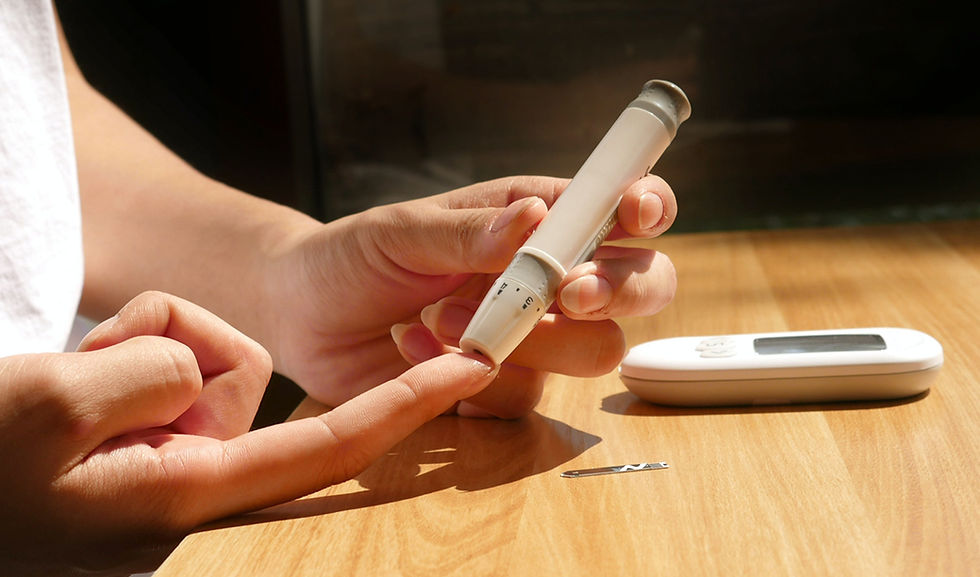
In an insulin-resistant body, the locks have become stiffer. The same amount of key no longer opens the doors efficiently. To compensate, your pancreas produces more insulin, and more, and more, until enough is circulating to force the doors open. Blood sugar can stay in the normal range for years through this compensation, which is why insulin resistance is so easy to miss on standard checkups. The condition can be quietly present long before fasting glucose ever budges.
The problem is that all of this extra insulin has consequences of its own. Insulin is a storage hormone. Its job is to move nutrients out of the bloodstream and into storage tissues. When your insulin is chronically high, your body is constantly receiving the signal to store rather than burn. This is true even between meals, when insulin should be low and stored fat should be available as fuel. Elevated baseline insulin keeps the storage door open and the burning door closed.
Two specific mechanisms make weight loss particularly difficult once this state is established.
Fat storage is continuously promoted. Even at rest, an insulin-resistant body is metabolically biased toward putting energy into fat cells rather than pulling it back out. The default state is storage.
Fat breakdown is actively suppressed. Lipolysis, the process by which the body releases stored fat to be burned for energy, is powerfully inhibited by insulin. Even modest insulin elevations are enough to meaningfully blunt fat release. For someone with chronically elevated insulin, the window during which the body can actually access stored fat is narrowed, and the caloric deficit you create through dieting produces less fat loss than it should.

To make matters worse, visceral fat, the fat stored around the internal organs, releases inflammatory signals that further impair insulin's ability to work properly. The fat causes more resistance, the resistance causes more storage, and the cycle reinforces itself. This is why patients who have been in this pattern for years often need clinical support to break out of it. Lifestyle changes alone, however disciplined, can struggle to reverse a cycle that is biochemically self-sustaining.
Why This Hits Filipinos Particularly Hard
The clinical reference points most people are familiar with for metabolic risk (BMI 25 as overweight, BMI 30 as obese, abdominal circumference thresholds, and so on) were largely established in Western populations. For Filipinos and other Southeast Asian populations, these thresholds significantly underestimate the actual risk.
Four physiological realities make insulin resistance and weight gain in the Philippines a different clinical picture from the West.
Insulin resistance develops at lower BMIs. Evidence supports using BMI 23 as the metabolic risk threshold for Asian populations, compared to 25 for Western reference groups. A Filipino adult with a BMI of 24, technically normal weight by global standards, may already have clinically significant insulin resistance.
Visceral fat is proportionally higher at equivalent body weights. Filipino adults tend to carry more visceral fat (the metabolically active fat around internal organs) relative to total body weight than Western counterparts at the same BMI. Visceral fat is the primary driver of insulin resistance and its downstream metabolic consequences.
Metabolic dysfunction appears earlier in life. Type 2 diabetes and pre-diabetes occur at younger ages and lower weights in Filipino adults than in Western populations. The Philippine Society of Endocrinology, Diabetes and Metabolism has published clinical guidelines reflecting these ethnic-specific risk thresholds.
Pancreatic compensation is more limited. Beyond resistance itself, Filipino adults tend to have lower beta-cell insulin secretory capacity. This means the pancreas has less reserve to compensate for resistance, and progression to type 2 diabetes happens more readily than in populations with higher secretory capacity.
The practical implication is significant. A Filipino patient with a BMI of 26 who is struggling to lose weight despite genuine effort may have meaningful insulin resistance that no standard dietary approach was ever designed to address. The reason the standard approach is not working is not the patient. It is the mismatch between a metabolic profile and a generic protocol.
How to Tell If This Is Your Problem
Insulin resistance can be present for years without producing dramatic symptoms. The most reliable way to identify it is through targeted blood work, but there are recognisable patterns worth knowing.
Signs Worth Paying Attention To
A combination of the following often signals insulin resistance:
Abdominal weight accumulation that seems disproportionate to your overall body size
Strong carbohydrate cravings, particularly in the afternoon or after meals
Energy crashes in the mid-afternoon despite adequate sleep
Difficulty losing weight despite consistent and reasonable dietary effort
Dark, velvety patches of skin (acanthosis nigricans) on the neck, underarms, or groin
Fasting blood glucose results in the high-normal range, between 5.5 and 6.9 mmol/L
Elevated triglycerides and low HDL cholesterol on a lipid panel
A personal history of polycystic ovary syndrome (PCOS) in women
A few of these on their own may not mean much. Several of them together, especially alongside the lived experience of weight loss resistance, are worth investigating clinically.
The Test That Actually Catches It
Fasting glucose is the test most patients have heard of, and it is the one most commonly run on routine bloodwork. The problem is that fasting glucose can stay normal for years while insulin is already significantly elevated. By the time fasting glucose finally rises, the metabolic problem has been in motion for a long time.

The more sensitive test is a fasting insulin level, which is often paired with fasting glucose to calculate the HOMA-IR index (Homeostatic Model Assessment of Insulin Resistance). HOMA-IR provides a quantitative measure of insulin resistance that can be tracked over time and gives a far earlier signal than fasting glucose alone.
A fasting insulin level above 15 mIU/L is generally considered elevated. Values above 20 to 25 mIU/L in the context of normal fasting glucose are a strong indicator of compensatory hyperinsulinemia, which is the biochemical hallmark of insulin resistance.
At Jan Medical Group, fasting insulin, fasting glucose, HbA1c, and a lipid panel are standard components of every SHAPE programme consultation. This means insulin resistance is identified, or ruled out, at the very beginning of the weight management journey, before any programme or prescription decision is made.
What Actually Works Once You Know
The good news is that insulin resistance is highly treatable, particularly when identified before it has progressed to type 2 diabetes. The intervention strategy has three layers, and the right combination depends on how advanced the condition is.
Dietary Strategy That Addresses the Real Problem
For insulin resistance, the goal is not simply lower calories. It is lower glycaemic load, meaning fewer and smaller insulin spikes throughout the day. Three adjustments deliver the most clinical benefit.
Reducing refined carbohydrate and sugar intake is the highest-impact single dietary change. White rice, a staple of the Filipino diet and a very high glycaemic-index food, produces significant insulin excursions after meals. Partial substitution with lower-glycaemic alternatives such as cauliflower rice or brown rice, or simply smaller rice portions paired with more protein and vegetables, meaningfully reduces the insulin burden without requiring dramatic dietary disruption.
Increasing protein intake improves satiety, displaces carbohydrate consumption naturally, and supports muscle mass. Muscle is the primary site of insulin-mediated glucose uptake, so building and preserving it gives your body more capacity to handle the carbohydrates you do eat.
Time-restricted eating within an eight to ten hour window each day reduces the total daily duration of insulin elevation and extends the period during which fat breakdown can occur. This approach is compatible with Philippine food culture, fits around family meal times, and does not require restrictive food rules.
Physical Activity as Insulin Sensitiser
Skeletal muscle is the largest tissue handling insulin-stimulated glucose disposal in the body. Movement, particularly resistance training and moderate-intensity aerobic activity, improves insulin sensitivity through several mechanisms, including increased glucose transporter (GLUT4) expression in muscle cells and improved mitochondrial function.
For busy Filipino professionals who cannot commit to a structured gym programme, even thirty minutes of moderate walking after meals produces a meaningful reduction in postprandial blood glucose and insulin. This is one of the highest-leverage and most accessible interventions available, and it costs nothing.
Medical Support When Lifestyle Is Not Enough
For patients with significant insulin resistance, particularly those with fasting insulin consistently above 20 mIU/L, pre-diabetes-range HbA1c, or multiple metabolic risk factors, lifestyle intervention alone may not be enough to meaningfully reverse the condition within a reasonable timeframe. Medical support becomes appropriate.
Metformin is the most widely used first-line pharmacological treatment for insulin resistance. It works primarily by reducing the liver's glucose production, which lowers fasting glucose and insulin levels, and it has an excellent safety record built over decades of clinical use. It is widely available in the Philippines and is frequently prescribed as part of a metabolic management programme.
GLP-1 receptor agonists and tirzepatide address insulin resistance through multiple complementary mechanisms. They improve insulin secretion in response to meals, reduce glucagon, slow gastric emptying, and support meaningful weight loss that itself reduces visceral fat and improves insulin sensitivity. For patients with both significant weight to lose and underlying insulin resistance, this class of medications offers dual benefit, addressing both the metabolic driver and the weight outcome simultaneously.
At Jan Medical Group, metabolic assessment results are incorporated directly into SHAPE programme design. Patients identified with significant insulin resistance receive programmes specifically calibrated to address it: dietary guidance targeting glycaemic load, physical activity recommendations matched to their capacity, and medication options including metformin or GLP-1 therapy where clinically indicated. The programme is not generic, and the prescription decision follows from what the blood work actually shows.

Frequently Asked Questions
What is insulin resistance and how does it cause weight gain?
Insulin resistance is a condition in which the body's cells do not respond normally to insulin, causing the pancreas to produce excess insulin to compensate. Chronically elevated insulin promotes fat storage (particularly visceral fat) and inhibits fat breakdown, creating a metabolic environment that actively resists weight loss even with appropriate caloric restriction.
How common is insulin resistance among Filipinos?
Very common, and increasingly recognised as underdiagnosed. Filipino and Southeast Asian populations develop insulin resistance at lower BMI thresholds than Western populations, carry proportionally more visceral fat at equivalent weights, and progress to type 2 diabetes more readily. Metabolic syndrome, closely associated with insulin resistance, affects a significant proportion of Filipino adults, particularly those with central abdominal fat.
How do I know if I have insulin resistance?
The most sensitive test is a fasting insulin level, used to calculate HOMA-IR. Fasting glucose alone can be normal while insulin is already significantly elevated. Common signs include abdominal weight gain, carbohydrate cravings, afternoon energy crashes, and difficulty losing weight despite dietary effort. A physician evaluation with targeted blood work is the only reliable way to confirm the diagnosis.
Can insulin resistance be reversed?
Yes, particularly in its earlier stages. Dietary changes that reduce glycaemic load, regular physical activity, weight loss, and where appropriate, medications such as metformin or GLP-1 therapy can meaningfully improve insulin sensitivity over weeks to months. Reduction in visceral fat specifically is associated with significant improvement in insulin resistance markers.
Does GLP-1 therapy help with insulin resistance?
Yes. GLP-1 receptor agonists such as semaglutide and tirzepatide improve insulin sensitivity through multiple mechanisms, including weight loss that reduces visceral fat, improved glucose-stimulated insulin secretion, and direct effects on liver glucose metabolism. For patients with both weight management goals and insulin resistance, GLP-1 therapy addresses both simultaneously.
Will my regular doctor catch this?
Not always. Standard annual physicals in the Philippines typically include fasting glucose but not fasting insulin. Because glucose can remain normal for years while insulin is already elevated, a normal glucose result does not rule out insulin resistance. If you suspect the condition, specifically asking for a fasting insulin level and HOMA-IR calculation is worthwhile.
Where can I get tested for insulin resistance in Metro Manila?
Jan Medical Group includes metabolic blood work covering fasting insulin, fasting glucose, HbA1c, and a lipid panel as a standard component of every SHAPE programme consultation at its BGC branch (Park Triangle Mall, Taguig) and Quezon City branch (Bengar Building, Del Monte Avenue, Brgy. Manresa). This testing is performed before any programme or prescription decision is made.
What Changes When You Identify the Real Problem
For a significant proportion of Filipino adults struggling with weight, insulin resistance is the central explanation that nothing else has accounted for. It is not a fringe diagnosis or a medical curiosity. It is a common, identifiable, and treatable condition that has been hiding behind years of dieting that did not work as expected.
The shift it creates is meaningful. Patients who have spent years assuming the problem was their discipline often discover that the problem was actually their metabolic environment, and that the environment can be changed. Dietary strategy becomes targeted instead of generic. Physical activity becomes leveraged for its specific insulin-sensitising effect. Medication, when clinically appropriate, addresses the underlying driver rather than just the symptom on the scale.
What is required to begin is a proper evaluation, including the blood work that actually catches insulin resistance rather than just looking past it. At Jan Medical Group, that evaluation is not an optional add-on. It is the foundation of every SHAPE programme, because treating weight without understanding metabolism is treating the symptom and leaving the cause in place.
If insulin resistance has been the hidden driver of your weight difficulty, identifying it changes everything about how your programme is designed, and substantially improves the likelihood that it will actually work this time.


Comments