
The Two Colours of a Stretch Mark, and Why One Is Easier to Treat Than the Other

A stretch mark begins as a wound she cannot see.
The skin has been pulled, by pregnancy or by adolescence or by a Wegovy gain that came too fast and a Wegovy loss that came too suddenly, beyond the elastic capacity of its dermal scaffolding. Collagen fibres fracture. Elastin networks tear. A small inflammatory cascade follows, beneath the surface. B
y the time the line appears on her skin, the injury underneath is weeks old.
This is the first thing worth understanding about a stretch mark. It is not a cosmetic blemish. It is a scar.
The Two Phases, In Colour
Stretch marks announce themselves in two stages, and the colour tells the story.
Striae rubra is the inflammatory phase. The marks appear pink, red, purple, sometimes violet, occasionally with a slight rise to the touch. This is the wound that is still healing, still vascular, still surrounded by active inflammation. It is unsightly, but it is also alive. Clinically, this is the phase in which a stretch mark is most responsive to treatment, because the dermis still contains the cellular machinery to remodel.

Striae alba is the mature phase. The marks have faded to white, silver, or a paler shade than the surrounding skin. The redness has resolved. The mark has gone quiet. To the eye, this looks like improvement. To a dermatologist, it is the opposite. The atrophy is now fixed. The dermis has thinned. The collagen has not been rebuilt. The mark is now, technically, a permanent atrophic scar.

This is why the timing of treatment matters more than almost any other variable. A purple stretch mark is a stretch mark that wants to heal. A white stretch mark is one that has stopped trying.
A short history of trying
For most of the twentieth century, the medical response to stretch marks was a polite shrug. Topical retinoids could thicken the dermis modestly. Silicone gels could marginally improve appearance. Centella asiatica creams, vitamin E oils, cocoa butter, almond oil, the entire shelf of well-meaning preparations — none of them altered the underlying scar. They softened the surface. They never touched the architecture.
The 2000s brought lasers, which in theory should have changed everything. Fractional CO₂ resurfacing did genuinely improve stretch marks, particularly white ones, by ablating columns of damaged tissue and triggering collagen remodelling. The problem in this part of the world was the colour of the skin doing the responding. Filipino skin, with its higher melanin content and Fitzpatrick type IV to V range, responded to fractional CO₂ with post-inflammatory hyperpigmentation at rates that made the cure visibly worse than the disease for many women. The lasers worked in clinical trials conducted on lighter-skinned populations. On a Manileña’s stomach after her second child, the results were unpredictable.
The 2010s introduced standalone microneedling, which used fine needles to create controlled dermal injury and stimulate collagen induction. The technology was safer for darker skin. The clinical improvement was real but modest. The dermal remodelling reached only as deep as the needles physically penetrated, which was rarely deep enough for mature striae alba.
What was needed was a technology that combined the depth of laser remodelling with the pigmentation safety of microneedling. That technology arrived, quietly, in the last decade.
What Microneedle Radiofrequency Actually Does
Microneedle radiofrequency, sometimes written as MNRF or fractional RF microneedling, threads insulated microneedles into the dermis and then delivers radiofrequency energy through the needle tips. The needles create the microchannels. The radiofrequency creates controlled thermal coagulation zones deeper than the needles alone could reach. Collagen denatures locally. The body’s wound-healing cascade responds with new collagen synthesis over the following weeks and months.
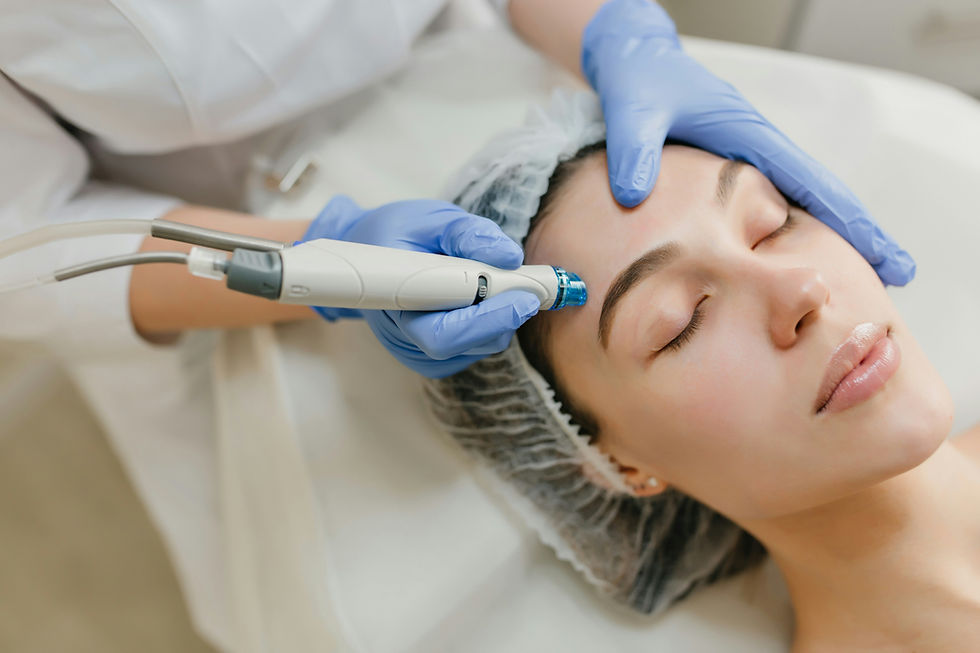
Critically, the radiofrequency energy is delivered below the skin surface, where the melanocytes that cause hyperpigmentation are largely absent. The technology is, by design, safer for darker Fitzpatrick skin types than ablative laser resurfacing.
The clinical data is now substantial. A 2024 systematic review and meta-analysis published in Aesthetic Plastic Surgery found that microneedle radiofrequency produced statistically significant improvement in stretch marks (standardised mean difference 0.57, p=0.003), with a favourable side effect profile compared to CO₂ laser, and notably no post-inflammatory hyperpigmentation in the trials reviewed.
This is the evidence base on which Jan Medical Group has built EXION Refine, the clinic’s stretch mark and dermal remodelling protocol, powered by EXION Fractional RF — BTL’s microneedle radiofrequency platform — at the Bonifacio Global City flagship.
What EXION Refine Treats, And What It Cannot
The honest version, because every aesthetic article should contain one.

Striae rubra (the purple, red, or pink mark) responds best. Two to four sessions of EXION Refine, spaced four to six weeks apart, produce visible improvement in colour, texture, and depth in most clients. The earlier in the inflammatory phase the treatment begins, the better the outcome. A stretch mark caught at three months post-pregnancy is a different proposition than one caught at three years.
Striae alba (the white or silver mark) responds more modestly. EXION Refine still produces measurable improvement in dermal thickness, texture, and the visual contrast between the scar and the surrounding skin, but the mark will not disappear. It will improve. The expectation, set honestly at consultation, is forty to seventy percent improvement in appearance over a four-to-six-session protocol, not erasure.
Very deep or very wide stretch marks may require combination protocols. For severe cases, EXION Refine can be combined with topical retinoid maintenance and growth factor application as part of a longer programme. No single protocol, including this one, is a complete answer to severe striae.
The Filipina, Specifically
A particular population walks into the Bonifacio Global City consultation room with this concern. The new mother whose striae gravidarum appeared in her seventh month and have refused to settle. The teenager whose growth spurt or weight cycling produced parallel marks across her thighs that she now hides under longer shorts. The woman who lost weight on Mounjaro and discovered that the stretch marks she had carried for fifteen years were now more visible, not less, because the surrounding skin had tightened around them.
For each of these women, the protocol differs in detail. The principle is the same. Treat the inflammatory marks early. Treat the mature marks honestly. Use the technology that is safe for her skin type, not the technology that was studied on someone else’s skin.
“For most of my career, the honest answer to a Filipina asking about her stretch marks was to manage her expectations downward,” Dr. Jan says. “Today the honest answer is different. The technology works. The protocol is real. The earlier we begin, the better the outcome. The skin type, which used to be the obstacle, is now part of why this particular device is the right choice.”
The Assessment That Begins It
A stretch mark protocol at Jan Medical Group begins with a clinical consultation, a Fitzpatrick skin type assessment, and a Davies classification of the striae — rubra, alba, or mixed. The treatment plan is built from there. For most clients, the protocol is four sessions of EXION Refine, spaced four to six weeks apart, with topical regimens prescribed between sessions to support remodelling.
For the woman who has been managing her stretch marks with creams for the last decade, the conversation is different. It is the conversation that should have been available to her ten years ago.
It is available now.
EXION Refine, powered by EXION Fractional RF, is available at Jan Medical Group, Park Triangle Mall, Bonifacio Global City. Consultations with Jan Paolo P. Dipasupil, MD, and the physicians of Jan Medical Group are by appointment. Enquiries: clinic@janmedicalgroup.ph.
Quick Reference
Stretch marks and EXION Refine, briefly
Stretch marks (striae distensae) are dermal scars caused by rapid skin stretching beyond the elastic capacity of collagen and elastin fibres. They develop in two recognised phases.Striae rubra is the early, inflammatory phase, with red, pink, or purple discoloration.Striae alba is the mature, atrophic phase, with white or silver appearance and dermal thinning.
EXION Refine is Jan Medical Group’s stretch mark and dermal remodelling protocol, powered by EXION Fractional RF, BTL’s microneedle radiofrequency platform. The technology combines insulated microneedles with radiofrequency energy delivered at the needle tips, producing controlled dermal remodelling deeper than standalone microneedling can reach. It is safer for darker Fitzpatrick skin types (IV–VI) than ablative fractional CO₂ laser, because the energy is delivered below the melanocyte-rich surface layer.
Clinical evidence for microneedle radiofrequency in stretch marks includes a 2024 systematic review and meta-analysis (Aesthetic Plastic Surgery) demonstrating statistically significant improvement (SMD 0.57, p=0.003) with a favourable side effect profile compared to CO₂ laser.
Frequently Asked Questions
What are stretch marks? Stretch marks (medically: striae distensae) are dermal scars formed when the skin is stretched faster than its collagen and elastin networks can accommodate. Causes include pregnancy, adolescent growth spurts, rapid weight gain, rapid weight loss (including on GLP-1 medications), bodybuilding, and corticosteroid use.
What is the difference between purple stretch marks and white stretch marks? Purple, red, or pink stretch marks (striae rubra) are in the early inflammatory phase. The dermal injury is recent, and the skin still contains the cellular machinery to respond to treatment. White or silver stretch marks (striae alba) are in the mature atrophic phase. The redness has resolved, the dermis has thinned, and the mark is now a permanent atrophic scar. Both phases respond to treatment, but striae rubra responds significantly better.
Can stretch marks be completely removed? No treatment fully erases mature stretch marks. The realistic outcome with current technology, including EXION Refine (the JMG protocol powered by EXION Fractional RF), is significant improvement in appearance — typically 40 to 70 percent improvement in colour, texture, and depth over a four-to-six-session protocol. Striae rubra (purple) can sometimes approach near-resolution if treated early. Striae alba (white) improves substantially but does not disappear.
What is EXION Refine and how does it treat stretch marks? EXION Refine is Jan Medical Group’s stretch mark and dermal remodelling protocol, powered by EXION Fractional RF, a microneedle radiofrequency device made by BTL. Insulated microneedles are threaded into the dermis, and radiofrequency energy is delivered through the needle tips. The needles create microchannels; the radiofrequency creates controlled thermal coagulation zones deeper in the dermis. Over the following weeks and months, the body responds with new collagen and elastin synthesis, thickening the dermis and improving the appearance of the stretch marks.
Is EXION Refine safe for Filipino skin? Yes. Microneedle radiofrequency, the technology that powers EXION Refine, is significantly safer for darker Fitzpatrick skin types (IV–VI, which most Filipinos fall within) than ablative fractional CO₂ laser. The radiofrequency energy is delivered below the melanocyte-rich surface of the skin, which substantially reduces the risk of post-inflammatory hyperpigmentation that complicates many laser-based stretch mark treatments in this population.
How many sessions are needed? A standard EXION Refine protocol is four sessions, spaced four to six weeks apart. Some clients require additional sessions depending on the severity and age of the stretch marks. Topical regimens prescribed between sessions support the dermal remodelling.
Is there downtime? Mild redness and pinpoint pinprick marks are typical for 24 to 72 hours after a session. Most clients return to work the next day. Make-up can be applied 24 hours post-treatment. Sun protection is essential for two to four weeks after each session.
When is the best time to treat stretch marks? As early as possible. Striae rubra (the purple/red phase, typically present in the first 6 to 12 months after the marks appear) responds significantly better to treatment than mature striae alba. For post-pregnancy stretch marks, treatment is generally recommended after the postpartum period and once breastfeeding has stabilised. For post-weight-loss stretch marks, treatment can begin once weight has stabilised on maintenance.
Can I treat stretch marks while pregnant or breastfeeding? EXION Refine is not recommended during pregnancy. For breastfeeding, treatment is typically deferred until weaning, although the physician will assess on a case-by-case basis.
Where can I get EXION Refine in the Philippines? EXION Refine is available at Jan Medical Group, Park Triangle Mall, Bonifacio Global City. The treatment is prescribed and assessed by a physician, and administered by the trained aesthetic team under medical supervision.
Do topical creams work for stretch marks? Topical creams (retinoids, Centella asiatica, hyaluronic acid, vitamin E, cocoa butter) produce modest improvement in appearance, particularly for striae rubra, but do not significantly remodel the dermal scar. They are useful as adjuncts to in-clinic treatment and as maintenance, but they are not a substitute for clinical intervention when meaningful improvement is the goal.
Why did older laser treatments for stretch marks not work well for Filipinos?Ablative fractional CO₂ laser was the gold standard for stretch marks in the 2000s and early 2010s, but it produces post-inflammatory hyperpigmentation at high rates in darker Fitzpatrick skin types (IV–VI). For many Filipino women, the post-treatment pigmentation was as visually distressing as the original stretch marks. Microneedle radiofrequency, which delivers energy below the melanocyte layer, addresses this limitation.
About The Author
Jan Paolo P. Dipasupil, MD is the medical director of Jan Medical Group, a physician-led medical aesthetics and wellness clinic with flagships in Bonifacio Global City, Taguig and Quezon City. He is Vice President at the Philippine Digital Medicine Society (PDMS). His clinical practice integrates obesity medicine and lifestyle medicine, with a particular focus on the post-weight-loss client on GLP-1 therapy.


Comments